Despite a dark past, statistics show an increasing trend in overall student involvement, grades and community service on college campuses due to Greek Life organizations.
By Dylan DeRaud
djd133@txstate.edu
Greek Life around the United States has an infamous history that does not go unreported in today’s time. Texas State University is no stranger to this history either with the campus’s own storied history adding to the controversy.
Leading the Rebuild
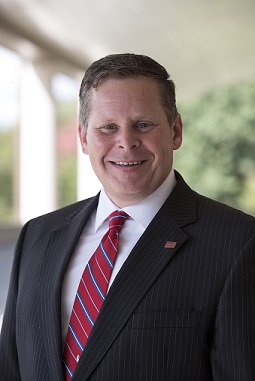
Wasn’t long ago that a former student at Texas State University, died of alcohol poisoning provided by his fraternity brothers of Phi Kappa Psi. The fraternity was then kicked off-campus. Since that tragedy, Texas State has been making an effort to rebuild their reputation. Leading the effort towards the culture change is Bob Dudolski, Assistant Dean of Students at Texas State University. Dudolski was hired nine years ago in the spring of 2013. His past experiences from the University of Alabama will assist him in his journey to bring change to Texas State.
“There were some major tragedies on this campus that were driven by five fraternities in particular, and those organizations were promptly closed,” Dudolski said. “By closing those old groups, it cleared a path for the new groups to change the culture. So, after the moratorium of the Greek Life community in 2017 and 2018, the community regrouped. I do feel like moving forward, we have made some tremendous strides. There is a core value and focus on being a good student, focusing on service and philanthropy and being leaders on campus.”
The past narrative about Greek Life has negatively impacted undergrads who are interested in joining social outlets. Through Dudolski’s efforts of creating a positive stigma, different from the past organizations that have left. The university has seen positive results come out of joining these communities. The consistent theme of the data shows that joining a fraternity or sorority leads to above average showings in total GPA averages. According to the Texas State University Fraternity Sorority Life website, in the fall of 2021, students with membership amongst recognized groups had higher GPAs compared to unaffiliated students. The combined averages of all Greek Life organizations was .03 grade points higher, than the combined grades of the rest of the 33,607 student body.
“Average GPA is higher than the average Texas State student, it’s because of a little more scrutiny on that membership. In order to be in good standing, and to be able to attend the fun stuff, organizations have to make sure that they’ve met their classroom academic requirements,” Dudolski said. “In fact, just tonight, we actually have an academic workshop that has been provided to the attorneys to help them with their members who may be struggling in classes, to give them the resources and support that they need.
Grades, Grades and More Grades
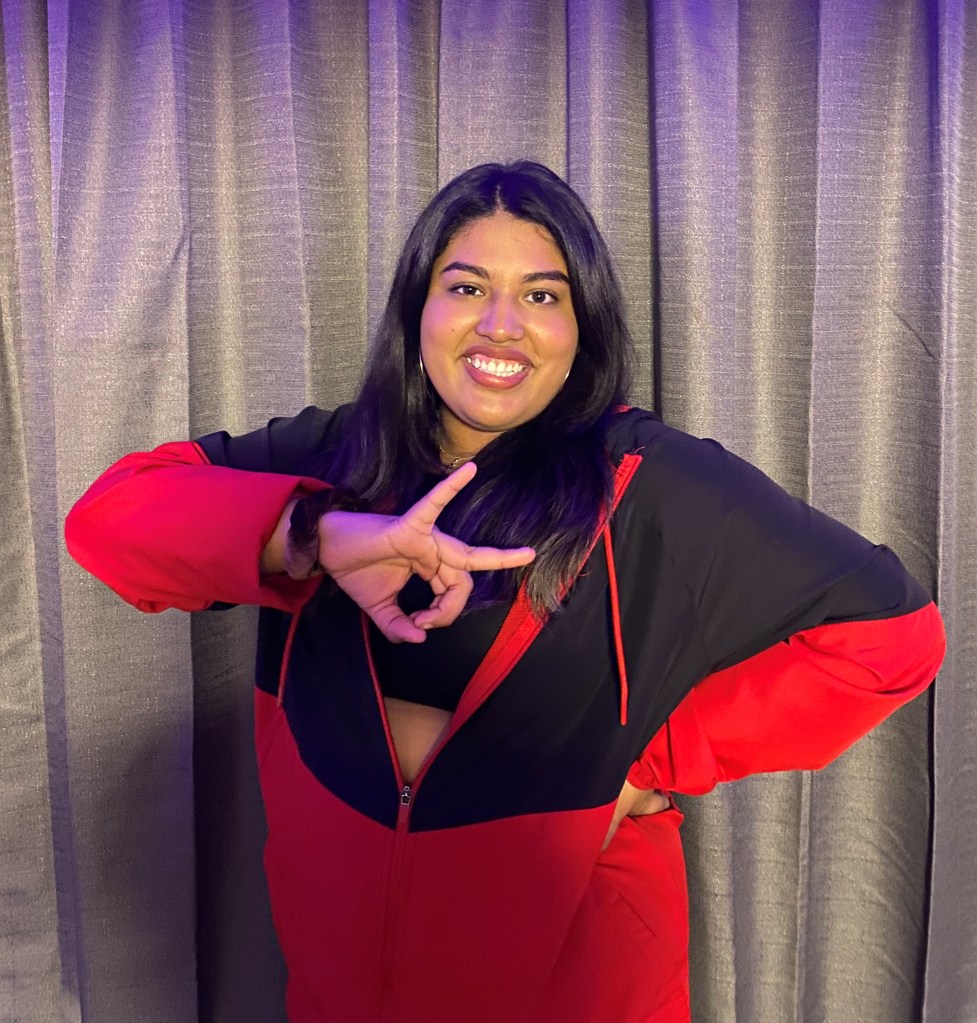
Now just .03 points higher isn’t much statistically when comparing what the overall grades of the student body is making compared to the 1,789 members of the greek community. However, Texas State sororities boast an average GPA of 3.02 compared to the rest of the women’s student population that sits at an average of 2.87. These results don’t come without leaders amongst the community stressing to undergrad members just how important grades are in order to maintain membership. Marion Rodriguez, member of Sigma Lambda Gamma Sorority and President of the Multicultural Greek Council, spoke about how the pressure the sorority places upon members to bring out the best in each of them. By being a part of the sisterhood, girls have an obligation to present themselves positively in the community, maintain high grades and be leaders for others.
“We are known for putting our academics really high. We always have one of the highest GPAs in our council,” Rodriguez said. “One of our principles is academics. So in our sorority, we hold study hours as a chapter every other week. So let’s say we have a chapter and then we’ll study together as a chapter.”
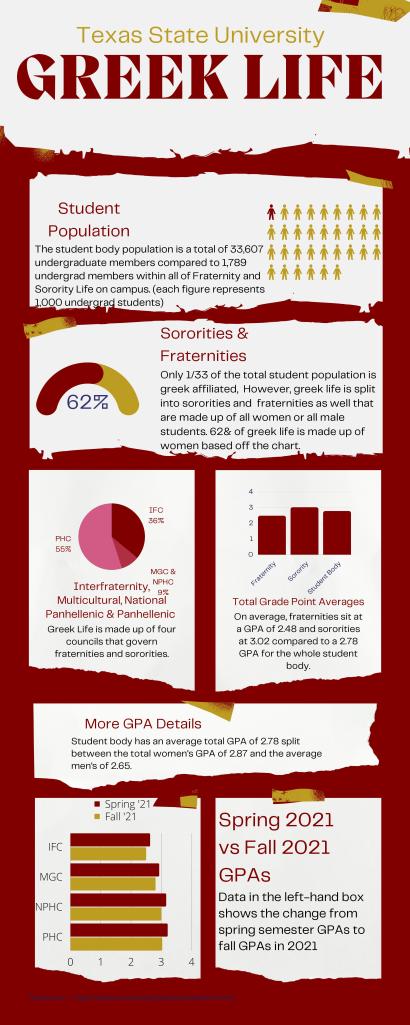
With a 2.91 grade point average for the Multicultural Greek Council, the standards held by its members and leaders show the progress they are making since the spring semester of 2019. The MGC held an average GPA of 2.78, with these results coming off the heels of the suspension of Greek Life in 2018. Ms. Rodriguez attributes many factors as to why students continue to join the recruitment process every semester despite the past.
“I feel like we get the people who like the feeling that they can find a home away from home. Because I feel like the majority of MGC, we’re mostly first-generation students, we’re trying to figure out what the heck is going on,” Rodriguez said. “Me personally, I found my home away from home and I found a group of Latina women who support me and empower me because I feel like that’s a big thing about sororities. I just wanted a group of women to support me and empower me throughout my college. That’s why I joined Greek life.”
The “Tears” of Recruitment
That feeling of belonging Greek Life creates for an individual is not shared by just Rodriguez alone. Faith Loughrey, Panhellenic President and member of the sorority Chi Omega knew more about the community she was potentially joining than Rodriguez did. However, both hold the same sentiment on how much the organizations have helped them to create a memorable college experience. Loughrey spoke on her experiences during recruitment weekend in her freshman year.

“It is an insane weekend, we wake up at four in the morning.” Loughrey said. “Put on a full face of makeup, a dress and heels and go and stay at a conference center for 15 hours while we’re running on empty and barely eating. Our emotions are so high, I just loved that weekend. The high intensity and everything. It was good for me, and that’s where I thrive. So that’s really why I wanted to apply for executive staff, because I knew that after that weekend, I could handle it.”
The scene described by Loughrey shows the scramble the women face attempting to join a Panhellenic Sorority. With 979 total members, the most out of all the other councils within Texas State Greek Life, and a 3.02 gpa. The Panhellenic Council led by Ms. Loughrey is in a contentious race to help these students find an organization to call “home”. Loughrey described it as “anxiety filled” and would see many girls “bawling their eyes out”. However, Loughrey explained that it’s part of the fun and is a major part of the process of bringing in undergrads who will benefit the community.
“You’re going to grow with your friends because you have the same values and you care about the same things,” Loughrey said.
Organizations also pair with charity foundations that they sponsor and hold events to raise money for. Chi Omega held a color run last semester in November in which they raised money for the Make-A-Wish Foundation.
“We get a wish kit every semester and we grant their wish, and then once we’re done granting their wish, we raise money for the foundation as a whole. There are a bunch of events, and I just love that I get to have a personal connection with it.” Loughrey said.
The chaos described by Loughrey isn’t the norm when explained by other council leaders within Greek Life. Otto Sanchez, Vice President of Recruitment for the Interfraternity Council at Texas State and member of Phi Kappa Sigma fraternity, has a different approach to recruiting than sororities. Instead of just a weekend, fraternities have a 365-day recruitment period with specific days where they can extend invitations to join around six weeks into the semester. The struggle for Sanchez is to make sure potential new members know the benefits of joining as well as the assurance that similar actions from the past regimes aren’t around anymore.

“My goal this semester for next semester is to open the doors for these new incoming freshmen and to give them the direction that is important,” Sanchez said. “As well as give them the values that they want to reinforce, but also create a safer school for them. It’s about getting to grow, getting to meet new people, and you’re realizing what you have in common with other people.”
What’s Trending Now
With the upholding of values and accountability of members being enforced by Bob Dudolski and student leaders within each Greek Life Council, organizations have seen an increase in the Greek Life population and academics since 2017. With the data trending in the positive direction, time will only tell how impactful these organizations will be on university campuses and overall student involvement.
 Dylan's blog